THE EFFIGY
Armour in gilt copper alloy
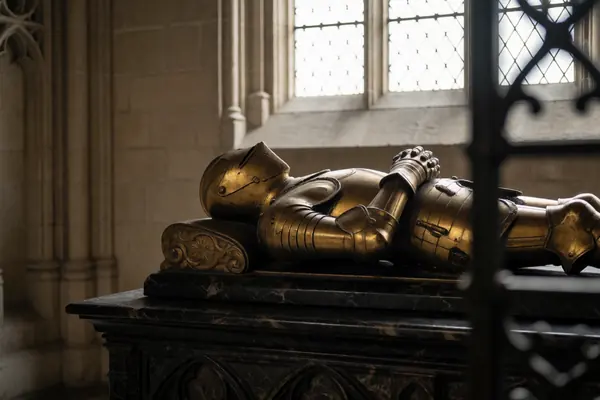
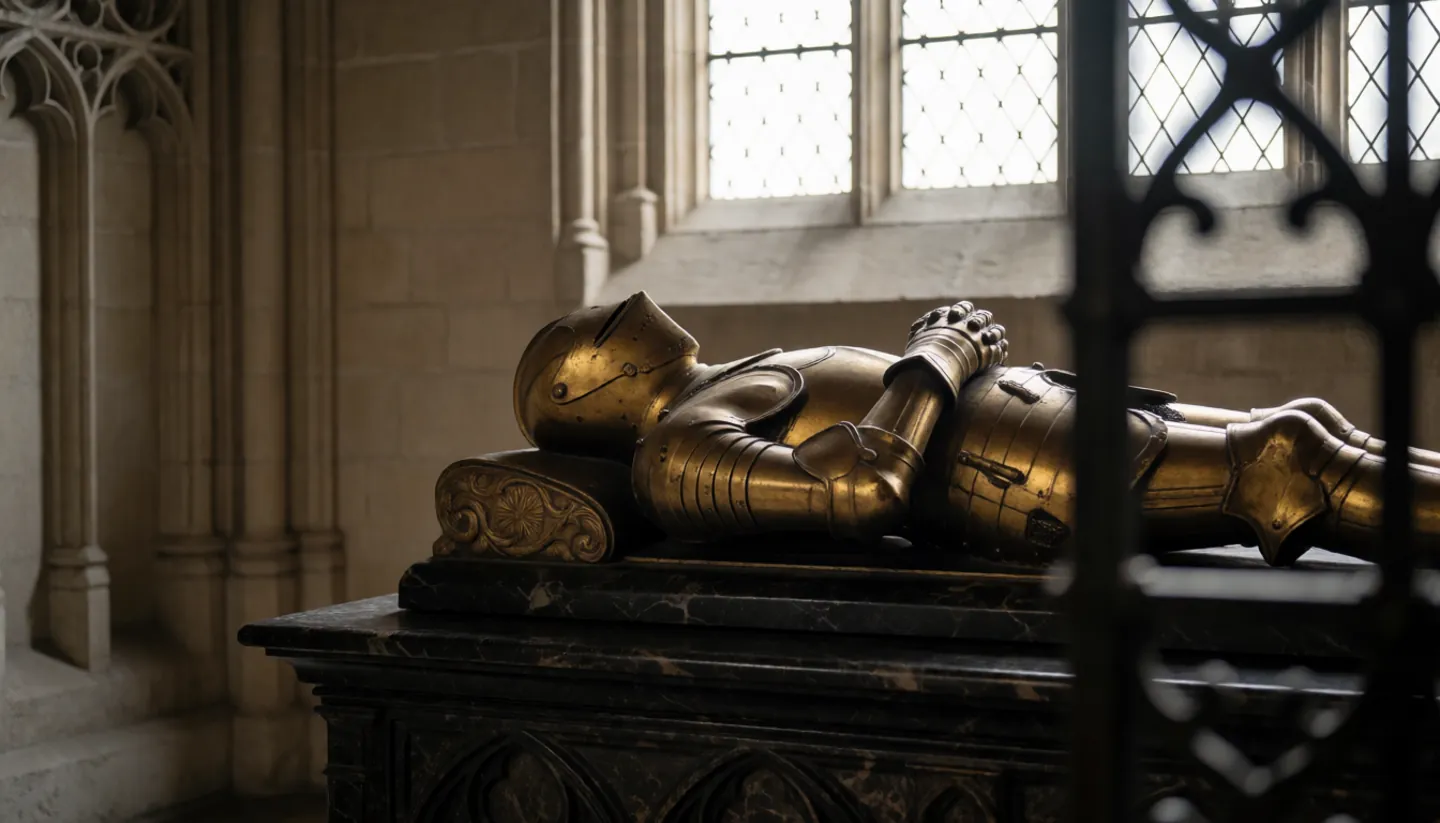
The effigy is gilt cast copper alloy, one of the most prestigious kinds of medieval tomb. It shows Edward recumbent, head on his helm, hands in prayer, feet on a leopard.
See what survivesMEDIEVAL ART, EXPLAINED
He wrote the brief for his own tomb.
Edward of Woodstock, eldest son of Edward III, died in 1376 aged 45. His will asked to be shown fully armed in plate of war. The gilt effigy at Canterbury Cathedral follows it so closely that researchers think a real armourer helped make it.
1376 a will that set the design
THE SHORT ANSWER
The will set the design.
Modern science has shown how it was built.
THE EFFIGY
The effigy is gilt cast copper alloy, one of the most prestigious kinds of medieval tomb. It shows Edward recumbent, head on his helm, hands in prayer, feet on a leopard.
See what survivesTHE ACHIEVEMENTS
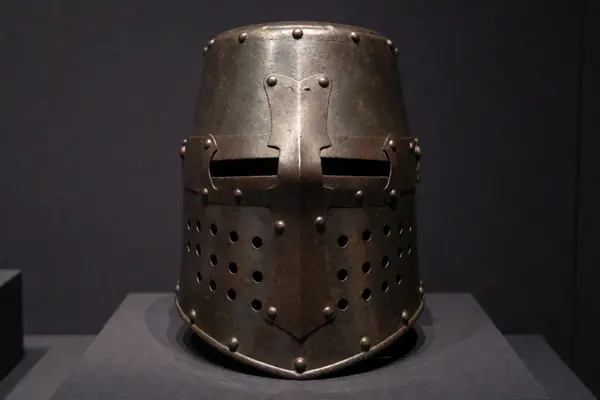
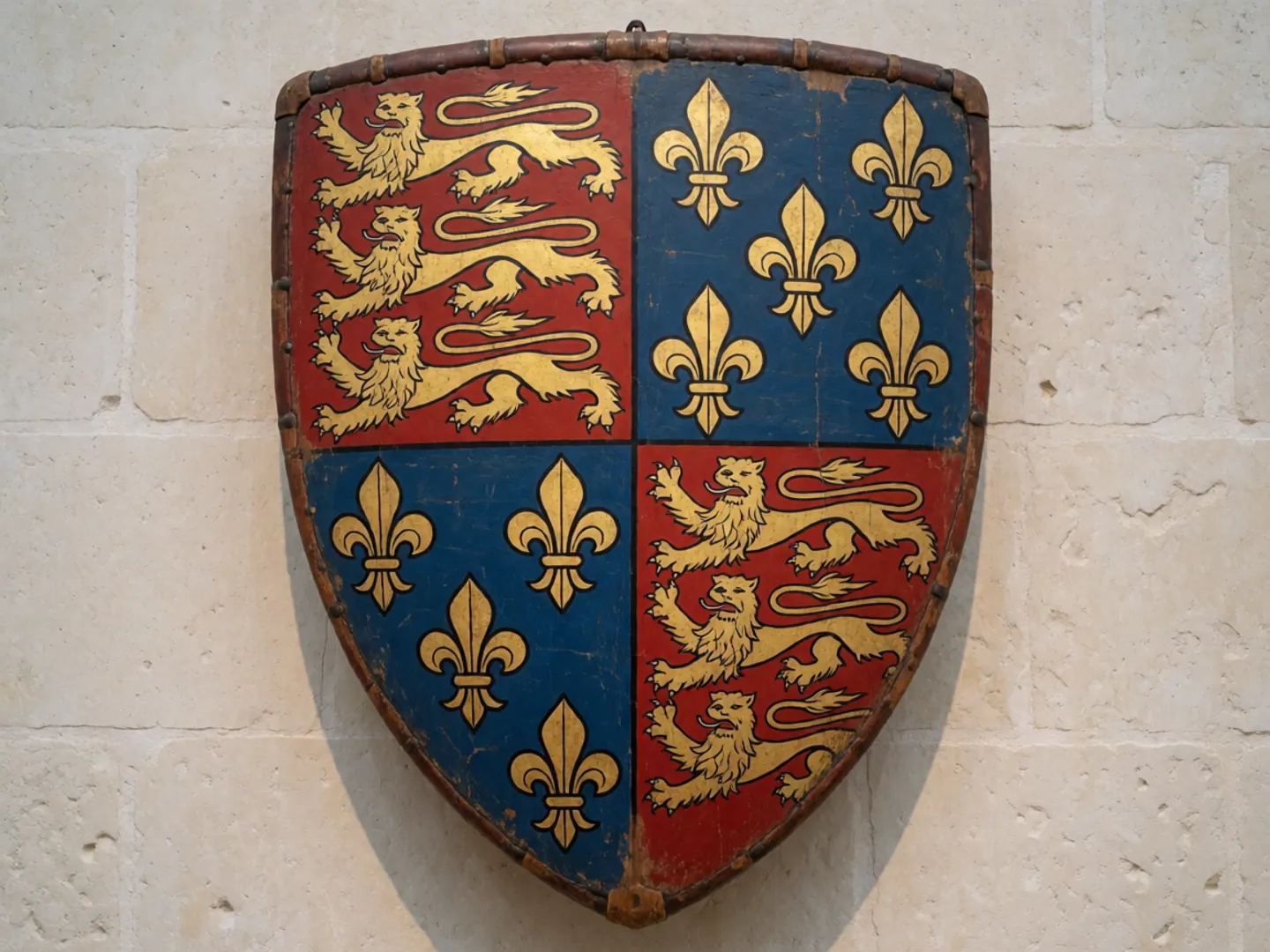
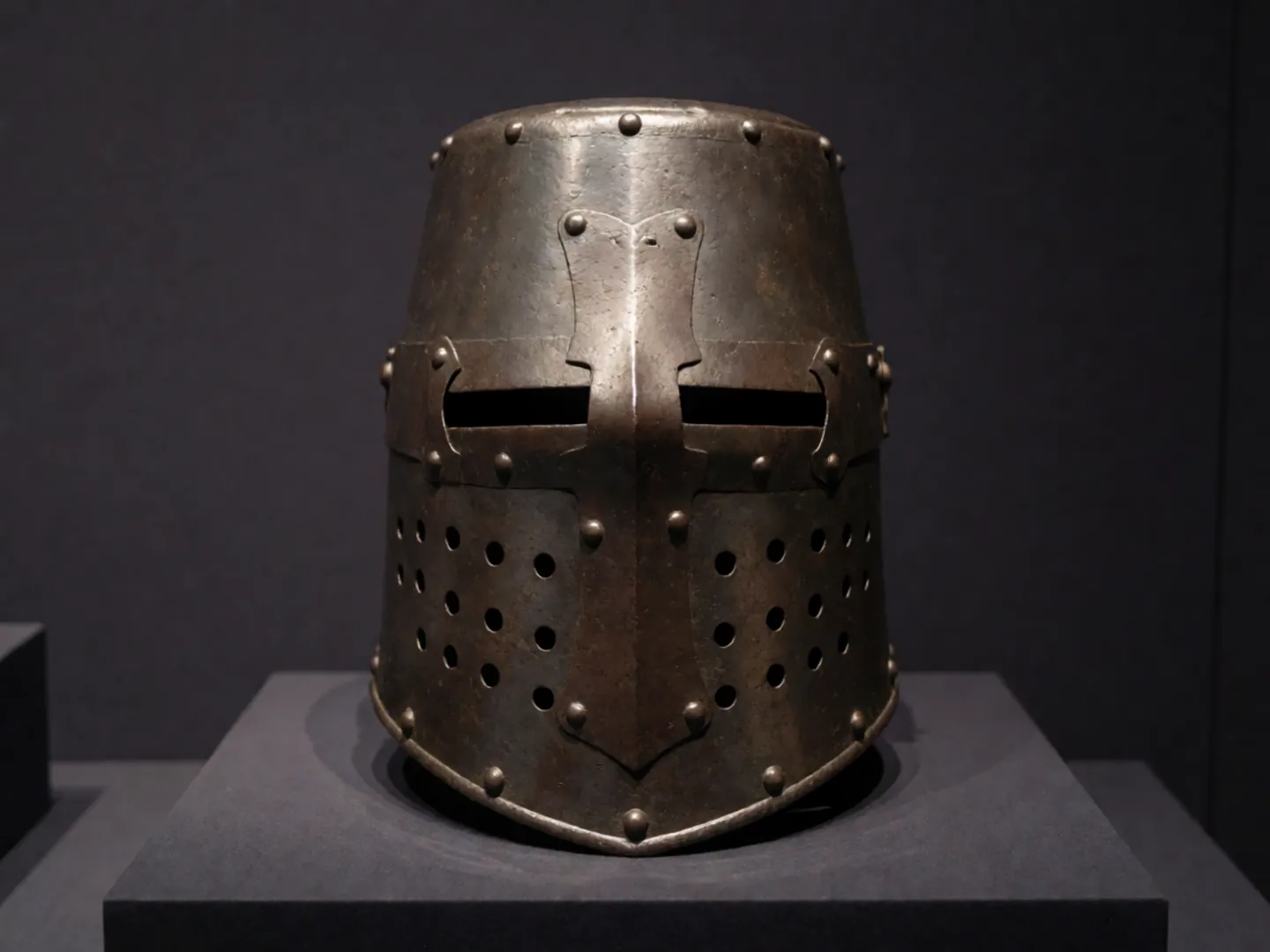
His heraldic achievements, including the helm, shield, jupon and gauntlets, hung over the tomb. The originals are now kept in a glass case, with 1950s copies in their place.
See the numbersTHE HERALDRY
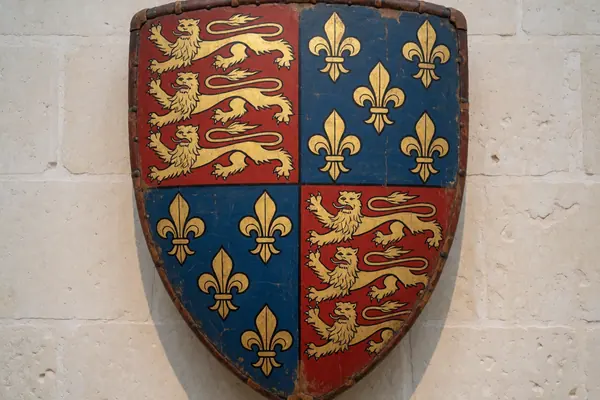
Around the tomb chest, shields alternate between his coat of arms and his badge of three ostrich feathers. The fleurs-de-lis stand for Edward III's claim to the French crown.
Read the epitaphWHAT SURVIVES
Choose one of the original achievements to see what it is made of. The bar shows how much of it is metal.
Based on the Canterbury Historical and Archaeological Society's notes on the tomb.
TWO NUMBERS WORTH KNOWING
One figure on how few survive,
one from the 2021 Courtauld study.
6
Large cast-metal sculptures surviving from medieval England
Smithsonian Magazine, reporting the Courtauld research, says the effigy is one of just six surviving large cast-metal sculptures from medieval England. Most metal effigies were destroyed in religious and civil turmoil.
SURVIVAL · COURTAULD STUDY
≈ 10 years
Delay between his death and the effigy
Metal analysis showed alloys almost identical to Edward III's effigy at Westminster, so the team re-dated the Canterbury effigy to about a decade after the prince's death in 1376.
DATING · COURTAULD STUDY
The team, led by Jessica Barker of the Courtauld Institute of Art, used a hand-held X-ray fluorescence spectrometer and an endoscope. They found the effigy was cast in sections held together by bolts and pins, and published the work in the Burlington Magazine.
FOUR THINGS TO LOOK FOR
The tomb stands in the Trinity Chapel of Canterbury Cathedral, behind an iron grille. These details reward a slow look.
Look at the plates and rivets: the study found they match real armour of the time.
The Church Monuments Society calls it a leopard; other writers have disagreed.
Count six with his arms and six with the ostrich feathers.
The painted wooden canopy shows the Holy Trinity, with copies of his achievements above.
THE EPITAPH
Around the edge of the tomb chest runs a French verse, set out in his will. In translation it begins: Who so thou be that passes by, where these corpse entombed lie, understand what I shall say.
It goes on: Such as thou art, so once was I, such as I am, such shalt thou be. The Church Monuments Society notes the curious contrast between these modest lines and the splendour of the gilt figure above them.
Questions
Edward of Woodstock, eldest son of Edward III and father of Richard II. He won fame at Crécy in 1346 and Poitiers in 1356, and died in 1376 aged 45, before his father, so he never became king.
In the Trinity Chapel of Canterbury Cathedral. His will asked for burial in the crypt, near the chapel of Our Lady Undercroft, but the Canterbury Historical and Archaeological Society says he was in fact placed close to the shrine of Thomas Becket.
Nobody is sure. The Canterbury Historical and Archaeological Society says the name was used only from the 16th century, and suggestions include black armour, a black shield, or the massacre at Limoges in 1370.
The objects that display a person's arms and status at their funeral. Edward's were his shield, helm and crest, jupon, scabbard and gauntlets, hung above his tomb.
No contracts survive. The Church Monuments Society says Henry Yevele and John Orchard are the most likely candidates, with the Purbeck marble tomb chest attributed to Yevele.
Gilt copper alloy. The Church Monuments Society describes a gilt cast copper-alloy effigy resting on a Purbeck marble tomb chest, and the Canterbury Historical and Archaeological Society calls it latten overgilt, a form of medieval brass. The Courtauld Institute's 2021 study found bolts and pins holding the figure together like puzzle pieces.
The Canterbury Historical and Archaeological Society says it looked black until layers of lacquer were cleaned off during a major restoration in the 1930s.
Sources
ABOUT THIS NAME
doodleprince.com is part of the DoodleSale portfolio. It isn't in an auction right now, but you can ask about leasing it.